What can be recycled — and what can’t
A plain-English guide for Houston and Harris County businesses. Sort it right, and your recyclables actually get recycled instead of riding to the landfill with everything else.
A quick read — about 4 minutes
Most of what a business throws away never had to be trash
Walk through the back of almost any office, retail store, or warehouse in Houston and you will find the same thing: a dumpster packed with flattened boxes, printer paper, cans, and bottles that could have been recycled. It is not because the team does not care. It is because nobody ever told them what goes where.
This guide is that missing piece. Print it, post it above the bin, or walk it through with your crew once — and your recycling stops being a bin nobody trusts and starts being part of how the building runs.
The one rule to remember
When in doubt, leave it out. One contaminated item can get an entire load rejected — so a clean bin with less in it beats a full bin nobody can use.
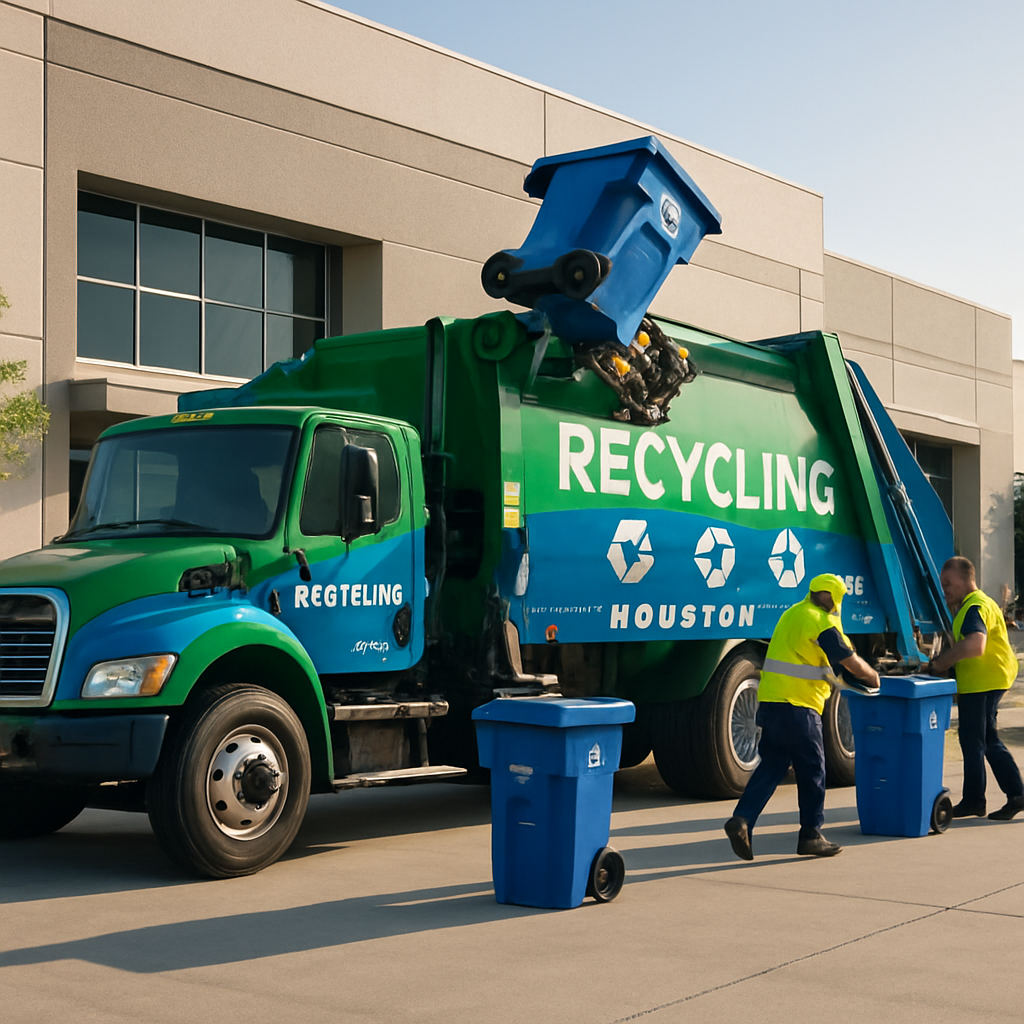
Less waste to the landfill
Cardboard and paper are a large share of what a typical commercial property throws out. Pulling them out of the dumpster makes a real dent.
A cleaner back of house
Bins that get emptied on a schedule — and rules the whole team understands — mean less overflow, fewer pests, and less clutter in the hallway.
Recycling that actually recycles
A bin full of greasy boxes and plastic bags gets treated as trash. Sorting it properly is what makes your program worth running.
What belongs in the recycling bin
These four categories cover the overwhelming majority of what a commercial property generates. Empty, rinsed, and dry is the standard.
Paper & Cardboard
Office paper, junk mail, newspapers, magazines, catalogs, corrugated boxes
The biggest and easiest win for most offices. Keep it clean and dry, and flatten the boxes so they stack instead of spilling over the bin.
Glass Jars & Bottles
Food and beverage jars, bottles
Rinse them and they are good to go. Window glass, mirrors, and drinking glasses are a different material — those belong in the trash.
Aluminum & Steel Cans
Soda cans, food tins, clean foil trays
Rinse the food out and give the can a quick crush to free up space. Metal is one of the most valuable things in the bin.
Plastic Containers
Drink bottles, milk jugs, detergent and shampoo bottles, tubs
Rigid containers and bottles, empty and rinsed. Caps can usually stay on. Thin plastic and film are a separate story — see below.
What usually is not recyclable
None of these are anyone’s fault — they are just the things that trip people up most. Each one has a better home than the recycling bin.
Greasy food containers
Pizza boxes, takeout trays, and food-soiled paper. Grease and food residue soak into a load of paper and can spoil the whole batch.
Instead: Tear off the clean lid and recycle that — the greasy half goes in the trash.
Plastic bags & film
Grocery bags, shrink wrap, bubble wrap, and bin liners. They wrap around the sorting equipment and shut the line down.
Instead: Take them back to a store drop-off, or reuse them before they become waste.
Styrofoam
Foam cups, clamshells, packing blocks, and peanuts. Foam shatters into small pieces that are almost impossible to sort out.
Instead: Save packing peanuts for reuse, or look for a specialty drop-off.
Batteries
Alkaline, lithium, and rechargeable batteries — and anything with a battery still inside it. They can spark and start a fire in the truck or at the facility.
Instead: Bring them to a battery or electronics drop-off. Never put them in a recycling bin.
Hazardous & medical waste
Paints, solvents, pesticides, motor oil, syringes, and medical waste. These need special handling and can put the people who touch your bins at risk.
Instead: Use your local household hazardous waste drop-off or a licensed collection service.
Four habits that make it work
Ten seconds of preparation is the difference between material that gets recycled and material that gets tossed at the sorting facility.
Give it a rinse
A quick rinse is all it takes. Food and liquid left sitting in a container spoils the paper and cardboard around it.
Flatten the boxes
Break cardboard down. It takes up a fraction of the space, keeps the bin from overflowing, and never jams the truck.
Keep it dry
Wet paper and cardboard are the most common reason a load gets turned away. Keep bin lids closed, especially through Houston downpours.
Don't bag it
Loose material sorts far better. Bagged recycling often gets pulled out and landfilled because sorters cannot see what is inside.
Not sure about something on this list?
Rules can vary from one hauler and one facility to the next, and they change over time. If your team is stuck on a particular item, ask us. We would rather answer a question than have a whole load rejected.
Ask Us a QuestionSet up a regular pickup for your building
If your business fills a dumpster with cardboard, paper, and containers every week, a scheduled recycling pickup keeps that material out of the landfill and off your team’s plate. Tell us what you generate and how often, and we will put together a plan for your property.